The Chamid: A Modern Handwritten Script for Creative Projects
When you need a typeface that feels personal, immediate, and stylish, a modern handwritten script often hits the mark. The Chamid is exactly that—a premium font designed to inject elegance and a human touch into a wide array of projects. It’s not just about mimicking cursive; it’s about offering a clean, contemporary flow that feels both sophisticated and approachable. For designers and creators, this kind of creative font is a versatile tool, bridging the gap between formal typography and casual, hand-lettered charm.
Understanding The Chamid's Visual Character
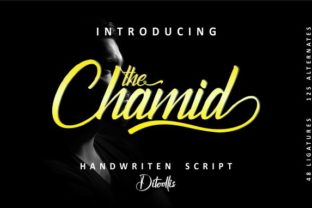
At its core, The Chamid presents a balanced, flowing aesthetic. Its letterforms maintain a consistent baseline and x-height, which is crucial for readability in a script font. The connections between letters are smooth and intentional, avoiding the overly loopy or illegible tendencies of some traditional scripts. This gives it a polished, professional feel. The weight is generally medium, providing enough presence for display font applications without becoming heavy or overwhelming. Think of it as the typographic equivalent of a confident, graceful signature—it carries personality without sacrificing clarity.
This typeface often includes stylistic alternates and ligatures. These aren't just decorative extras; they're functional tools that allow you to customize the look, preventing repetitive letter shapes and enhancing the natural, handwritten flow. When exploring a font family like The Chamid, checking for these OpenType features is a smart move, as they significantly expand its utility for nuanced logo design or headline work.
Where The Chamid Truly Shines: Practical Applications
The real value of a font like The Chamid lies in its adaptability. Its elegant yet accessible style makes it a strong candidate for projects where you want to convey warmth, creativity, or a bespoke quality.
For brand identity, it can be a game-changer. A boutique, a lifestyle blog, a artisanal food product, or a creative consultancy might use The Chamid for their primary logo or supporting wordmark. It immediately signals a hands-on, personal brand ethos. Pair it with a clean sans serif font for body text to create a clear visual hierarchy—The Chamid handles the emotional, high-impact headlines, while the sans serif ensures the informational content is effortlessly readable.
In editorial design and publishing, it excels for chapter titles, pull quotes, or magazine section headers. It adds a layer of sophistication and breaks up the monotony of dense text layouts. For packaging design, think coffee bags, candle labels, or cosmetic boxes—The Chamid can articulate the product's story with an artisanal flair that standard fonts can't match.
Digital spaces benefit greatly. Use it for social media graphics—Instagram story highlights, Pinterest pins, or quote cards—to stop the scroll with its engaging, human feel. On websites, it can be effective for hero section headlines or call-to-action buttons, provided it's used strategically and paired with a highly legible body font. For web design, always test its rendering on different devices and ensure it doesn't compromise page speed or readability.
Don't overlook personal and commercial print projects. The Chamid is a natural fit for wedding invitations, event programs, thank you cards, and personalized stationery. For small business owners, it can elevate business cards, letterheads, and promotional flyers, lending a cohesive and professional design asset to all customer touchpoints.
Making The Chamid Work for Your Project
Choosing any display font requires a bit of strategy. Start by defining the project's personality. Is it playful, luxurious, minimalist, or rustic? The Chamid leans toward elegant and modern, so it pairs well with projects that have a contemporary yet personal angle. If your brand voice is ultra-corporate or tech-focused, a script font might not be the primary choice, but it could still work as an accent for specific, limited applications.
Testing is non-negotiable. Don't just look at the font specimen sheet. Mock it up in your actual design context. Place it next to your chosen body copy font—be it a serif font or sans serif—to evaluate the pairing. Check the spacing, the contrast in weight, and the overall rhythm. A common pairing strategy is to combine a expressive script like The Chamid with a neutral, geometric sans serif (like Montserrat or Lato) or a transitional serif (like Georgia). The key is that the fonts should complement, not compete.
Review the font's full offering. Does it include multiple weights (regular, bold)? Are there italic versions? What about the breadth of its stylistic alternates? A robust font family gives you more flexibility to maintain consistency across various applications while introducing subtle variation. Also, consider the technical details: file formats (OTF, TTF, WOFF/WOFF2 for web), and importantly, the commercial font licensing. Ensure the license covers your intended use—whether it's for a single client project, an unlimited number of digital ads, or physical product packaging.
Finally, think about readability in context. A handwritten font like The Chamid is best used for short bursts of text—headlines, titles, logos, and accents. For long-form reading, always default to a highly legible serif or sans serif. By using The Chamid strategically, you leverage its emotional impact where it matters most, ensuring your audience engages with your content without strain.
In the end, The Chamid is more than just a creative font; it's a design tool that, when used thoughtfully, can significantly enhance the emotional resonance and perceived quality of your work. It helps build a recognizable brand identity, elevates editorial layouts, and adds a personal stamp to digital and print projects alike. Its strength lies in its modern elegance—a quality that makes it a valuable addition to any designer's or creator's typographic toolkit.