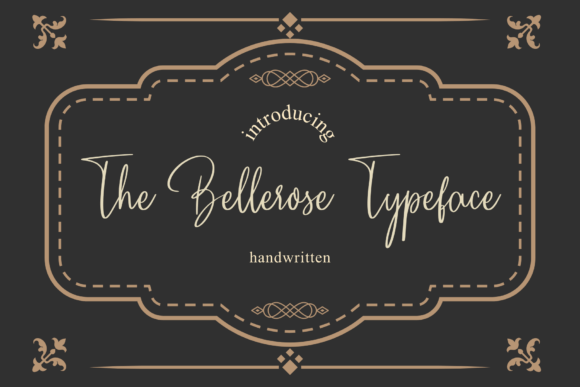
The Bellerose Typeface: A Vintage Script for Modern Projects
Finding a font that genuinely feels like it has a story to tell can be a challenge. You might scroll through countless options, searching for that perfect blend of character and clarity. The Bellerose Typeface is one of those rare finds that immediately communicates a specific mood and era, offering a solution for designers and creators who need their work to convey elegance with a personal touch. It’s not just another script font; it’s a design asset with a distinct personality rooted in classic craftsmanship.
Visual Character and Timeless Appeal
At its core, The Bellerose Typeface is a premium font that draws direct inspiration from the fluid, expressive strokes of classic calligraphy. Its letterforms are defined by flowing, interconnected curves and delicate, hairline serifs that provide a subtle structural foundation. This isn't the wild, untamed script of a modern handwritten font. Instead, it possesses a measured grace and old-world charm, making it feel both personal and polished. The overall effect is one of sophistication, perfect for projects that require a touch of vintage romance or refined luxury.
The personality of this typeface is warm, inviting, and inherently elegant. It avoids the stark minimalism of a sans serif font, instead offering visual texture and depth. When you use The Bellerose Typeface, you're not just placing text on a page; you're adding a layer of narrative and emotion. This makes it a standout choice in the world of modern typography, where differentiation and brand personality are paramount. Its versatility lies in this ability to feel both nostalgic and fresh, depending on its context and pairing.
Where This Script Font Truly Shines
Understanding where to deploy a font like The Bellerose is key to unlocking its potential. It excels in applications where visual impact and emotional connection are more important than dense, long-form readability. Think of it as a specialist tool in your design toolkit, perfect for specific, high-stakes moments.
In branding and logo design, The Bellerose Typeface can become the cornerstone of a visual identity for boutique businesses. Imagine it for a high-end patisserie, a bespoke jewelry line, a wedding planning service, or a luxury skincare brand. It immediately sets a tone of quality, care, and artisanal value. For packaging design, it adds instant shelf appeal, suggesting that the product inside is crafted with similar attention to detail. It works beautifully on labels, boxes, and tags where space is limited and every element must communicate effectively.
For editorial design and publishing, this creative font is ideal for magazine mastheads, chapter titles, pull quotes, and subheadings. It provides a beautiful counterpoint to a clean body text font, creating visual hierarchy and guiding the reader's eye. Similarly, in digital and web design, it can be used strategically for hero section headlines, special announcement banners, or elegant call-to-action buttons, ensuring key messages stand out with style.
Of course, its natural home is in stationery and event collateral. Wedding invitations, save-the-dates, and thank-you cards are a perfect match for its romantic and graceful aesthetic. Beyond weddings, it’s excellent for any social media graphics that need to feel special—think Instagram quote cards, promotional announcements for a new collection, or Pinterest pins for a lifestyle blog. For crafters and hobbyists, it elevates personal projects like scrapbooking, handmade gift tags, and custom art prints.
Practical Guidance for Implementation
Choosing a font is only half the battle; using it effectively is what matters. When evaluating The Bellerose Typeface for a project, start by considering the brand's core message. Does it align with values of elegance, tradition, romance, or artisanal quality? If the project calls for a clean, ultra-modern, or highly technical feel, a different typeface family might be more appropriate. This font is about evoking a specific feeling, so ensure that feeling matches the project's goals.
A critical step is testing font pairing. Because The Bellerose is a display font with high personality, it should almost never be used for body text. Its strength is in headlines, logos, and accents. Pair it with a highly legible, neutral serif font or a clean sans serif font for body copy. A classic combination might be The Bellerose for the main heading, a font like Lora or Playfair Display for subheadings, and a simple sans serif like Open Sans or Lato for paragraphs. This creates a clear visual hierarchy that is both beautiful and functional.
Always review the full character set and included styles when you acquire a commercial font like this. Look for stylistic alternates, ligatures, and swash characters. These extras can dramatically change the look of a word or phrase, allowing for even greater customization and flair. For instance, a special swash on a capital letter can turn a simple name into a signature.
Readability is a paramount concern, especially in web design and packaging design. Use The Bellerose at larger sizes where its intricate details are clear. Avoid using it for small, critical information like phone numbers, ingredient lists, or legal disclaimers. Test it on various backgrounds and in different lighting conditions to ensure it remains legible and impactful.
Finally, always ensure you have the correct commercial licensing for your project. A premium font is a professional design asset, and its license dictates how it can be used—in logos, on merchandise, in digital products, or for client work. Respecting the license protects you legally and supports the type designers who create these tools. By thoughtfully integrating The Bellerose Typeface, you can elevate your work, build a stronger brand identity, and create designs that resonate with a sense of timeless, sophisticated charm.