Well Noted: The Handwritten Script Font for Modern Designers
In a world saturated with digital precision, there's a growing hunger for authenticity. We crave designs that feel human, personal, and crafted with care. This is precisely the space where Well Noted, a delightful handwritten script font, excels. It’s not just another typeface in your library; it's a design asset that injects immediate warmth and character into any project it touches. Think of it as the typographic equivalent of a handwritten note in a sea of printed memos—it stands out because it feels genuine.
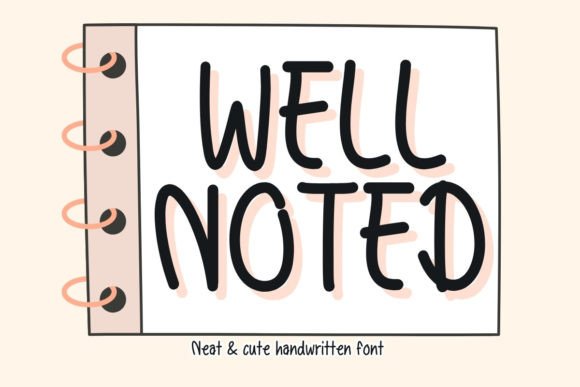
At its core, Well Noted is a premium font designed for clarity and charm. The letterforms flow with a natural, slightly uneven rhythm that mimics real handwriting, avoiding the sterile perfection of many digital scripts. The ascenders and descenders are thoughtfully crafted, giving words a pleasant, bouncy silhouette. What makes it particularly versatile is its legibility. Unlike some overly decorative script fonts that sacrifice readability for style, Well Noted maintains a clear distinction between characters, even at smaller sizes. This balance makes it a practical choice, not just a decorative one.
Where Well Noted Truly Shines
The beauty of a well-designed handwritten font like this is its chameleon-like ability to adapt. Its personality is friendly and approachable, making it a powerhouse for projects where you need to connect on a human level.
- Branding & Logo Design: For small businesses, artisanal brands, cafes, and boutiques, a logo set in Well Noted can instantly communicate a story of handcrafted quality and personal service. It’s a fantastic choice for a brand identity that wants to feel welcoming and authentic, rather than corporate and distant.
- Marketing & Social Media Graphics: In the fast-scroll world of Instagram, Pinterest, and Facebook, a touch of personality stops the thumb. Use Well Noted for quote graphics, promotional announcements, or story highlights. It adds a layer of visual hierarchy that draws the eye to key messages, making your social media graphics more engaging and shareable.
- Publishing & Editorial Design: While it’s not a body text serif font, it’s a stellar display font. Think chapter titles in a cookbook, pull quotes in a lifestyle magazine, or the header of a blog post. It breaks up the monotony of standard sans serif headings and adds an editorial flair that feels curated and thoughtful.
- Packaging & Product Design: On a product label, jar, or box, Well Noted can elevate the perceived value. It suggests a product made with attention to detail, perfect for gourmet foods, cosmetics, stationery, and handmade goods. The font itself becomes part of the packaging design story.
- Personal & DIY Projects: From wedding invitations and greeting cards to scrapbooking and printable wall art, this font is a crafter’s dream. It brings a cohesive, professional-looking charm to personal projects that generic system fonts simply can’t match.
Making the Font Work for You: Practical Guidance
Choosing the right font is a strategic decision. Here’s how to evaluate and implement Well Noted effectively in your work.
Evaluating Project Fit
Ask yourself: what is the tone of this project? Well Noted is your ally for projects that require brand perception to be friendly, approachable, creative, or personal. It’s less suited for ultra-formal, technical, or highly minimalist contexts where a clean sans serif or classic serif font would be more appropriate. Always consider your audience. For a young, creative demographic, it’s a perfect fit. For a law firm’s annual report, it would be a mismatch.
The Art of Font Pairing
This is where modern typography gets interesting. A script font like Well Noted rarely works well alone for large blocks of text. Its strength is in headlines, subheads, and accents. The key is to pair it with a stable, highly legible partner.
- With a Sans Serif: This is a classic and safe combination. Pair Well Noted with a neutral, geometric sans serif like Montserrat, Lato, or Open Sans for body copy. The script font provides the personality, while the sans serif offers clean readability.
- With a Serif: For a more sophisticated, editorial look, try pairing it with a transitional or old-style serif font like Georgia or Libre Baskerville. This creates a beautiful contrast between the organic script and the structured serif, perfect for editorial design or elegant branding.
Always test your pairings in context. Create a mock-up of a business card, a social media post, or a webpage layout to see how the fonts interact in terms of size, weight, and spacing.
Readability and Licensing: The Non-Negotiables
Readability is paramount. Test Well Noted at the sizes you intend to use it. It’s fantastic for 24pt and above, but for smaller applications like detailed product information, ensure it remains clear. Check the character set—does it include the punctuation and symbols you need? A good commercial font will.
Speaking of which, always verify the licensing. Since Well Noted is a premium font, it will come with a license that outlines permitted uses. Typically, a desktop license covers print and static digital images, while a webfont license is required for web design. If you’re creating merchandise for sale (like t-shirts or mugs), an extended license might be necessary. Respecting the license protects you legally and supports the type designers who create these valuable design assets.
Exploring the Font’s Full Potential
Don’t just use the basic alphabet. Explore what else is included. Many quality script fonts come with alternates (different versions of key letters like ‘a’, ‘e’, or ‘s’), ligatures (special combined characters for common letter pairs like ‘th’ or ‘st’), and swashes (decorative tails). These features are what take your typography from good to great, allowing you to customize the look and avoid repetitive letter shapes for a more authentic handwritten feel.
Ultimately, integrating Well Noted into your toolkit is about adding a reliable source of warmth and personality. It’s a creative font that solves a real design problem: how to make digital work feel human. By using it strategically—as a display font for impact, paired wisely for clarity, and licensed correctly for your needs—you can consistently create designs that don’t just communicate a message, but also build a genuine connection with your audience. In the crowded landscape of typefaces, that human touch is what makes a design truly memorable.