Motherlane: A Modern Calligraphy Script with Natural Flow
Understanding the Visual Character of Motherlane
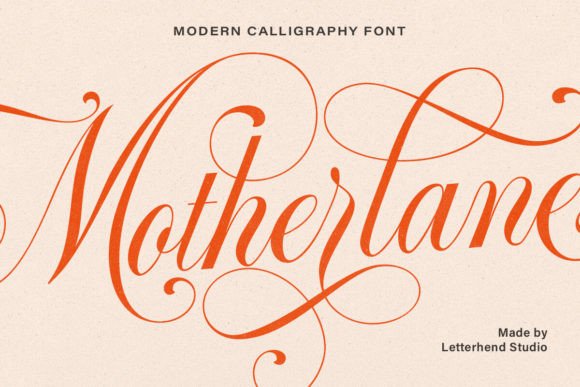
There’s a particular quality in handwritten text that digital fonts often struggle to capture—the slight irregularity, the organic weight shifts, the sense that a human hand actually touched the page. Motherlane is a modern calligraphy script that leans into this quality with intention. It’s not trying to be a perfect reproduction of traditional calligraphy, nor is it mimicking casual handwriting. Instead, it occupies a space between elegance and authenticity that feels genuinely contemporary.
The swashes are where this typeface really comes alive. They extend from letterforms with a natural, unhurried movement rather than looking pasted on or overly decorative. When you set a word or phrase in Motherlane, the connections between characters feel fluid, and the terminal strokes add visual interest without overwhelming the composition. This is a font that understands restraint—its embellishments serve the overall rhythm of the text rather than competing with it.
What makes Motherlane practical for real projects is its legibility at intended sizes. Script fonts can become difficult to read when letterforms blur together or when ascenders and descenders create visual clutter. Motherlane maintains clear character separation while preserving its handwritten personality. The letter spacing and baseline variation feel calibrated for display use, which is exactly where this font belongs.
Where Motherlane Fits Best in Real Projects
Wedding invitations remain one of the most natural applications for a font like Motherlane. The calligraphic style aligns with the formality and personal significance of the occasion, while its modern sensibility keeps designs from feeling dated or overly traditional. Pair it with a clean serif or sans serif font for body text, and you have a typographic system that communicates elegance without pretension.
Beyond weddings, Motherlane works well across a range of brand identity and packaging design projects. Boutique brands in beauty, fashion, artisan food, and lifestyle spaces often need a typeface that conveys craftsmanship and personal attention. A script font like this can serve as a display font for logos, product names, and taglines, especially when the brand wants to feel approachable yet refined.
Consider these applications where Motherlane tends to perform well:
- Logo design for small businesses, studios, and personal brands
- Editorial design including magazine headers, chapter titles, and pull quotes
- Social media graphics where handwritten style adds warmth and personality
- Greeting cards and stationery for both personal and commercial use
- Packaging design for cosmetics, candles, artisan goods, and specialty products
- Web design elements like hero text, section headers, and decorative accents
- Book covers and interior chapter pages for fiction and lifestyle publications
The font’s versatility extends to digital and print contexts. On screen, it maintains its character at larger sizes, making it suitable for website headers and social media graphics. In print, it reproduces cleanly on quality paper stock, which matters for wedding cards, magazines, and packaging where production quality reflects directly on the brand.
How Script Fonts Influence Perception and Engagement
Typography shapes how people interpret a message before they read a single word. A premium font like Motherlane communicates specific qualities—warmth, creativity, personal investment, sophistication—through its visual form alone. When someone encounters a modern calligraphy script on a product label or social media post, they make instant associations about the brand’s personality and values.
This is where font pairing becomes essential. Motherlane carries a strong stylistic voice, so pairing it with a neutral, well-structured typeface creates necessary contrast. A geometric sans serif font or a classic serif font can anchor the design, provide readability for longer text passages, and establish a clear visual hierarchy. The script font handles the expressive, attention-grabbing moments while the secondary typeface handles the informational heavy lifting.
For brand identity work, consistency matters as much as style. If you choose Motherlane for a logo, consider how it will extend across all touchpoints—business cards, website, packaging, social media graphics, and printed materials. A creative font with strong personality can become a recognizable brand asset, but only if it’s used thoughtfully and consistently across every application.
Practical Guidance for Working with Motherlane
Before committing to any display font for a project, test it in context. Set actual project text—your real business name, your actual product descriptions, your specific headlines—rather than relying on specimen previews alone. Some letter combinations work beautifully in modern calligraphy scripts while others create awkward connections or spacing issues. Motherlane handles most combinations well, but project-specific testing is always worthwhile.
Pay attention to the included styles and alternate characters. Many premium fonts ship with stylistic alternates, ligatures, and swash variations that can dramatically change the font’s appearance. Accessing these features requires design software that supports OpenType functionality, so check your tools before purchasing. The alternates in Motherlane give you flexibility to customize the look for different contexts—from more restrained headers to more expressive decorative elements.
Readability deserves honest assessment. Script fonts and handwritten fonts are inherently less legible than serif or sans serif typefaces at smaller sizes and in longer text blocks. Use Motherlane where it excels—headlines, short phrases, logos, and decorative text—and choose a more readable companion font for body copy. This isn’t a limitation; it’s how display fonts are designed to work within a broader typographic system.
Licensing is another practical consideration for commercial use. If you’re a designer working on client projects, a small business owner creating your own materials, or a publisher producing printed content, verify that the license covers your intended use. Most commercial font licenses distinguish between desktop use, web design embedding, and digital product creation, so review the terms before finalizing your project.
Finally, think about your audience. Motherlane appeals to a demographic that values personal aesthetics, craftsmanship, and visual sophistication. It resonates particularly well with adults in the 25–45 range who engage with lifestyle, beauty, wedding, and artisan brands. If your target audience aligns with these sensibilities, a modern calligraphy typeface like Motherlane can strengthen your brand identity and deepen audience connection in ways that more generic design assets simply cannot achieve.