Meridian: A Rough Script Font for Timeless Character
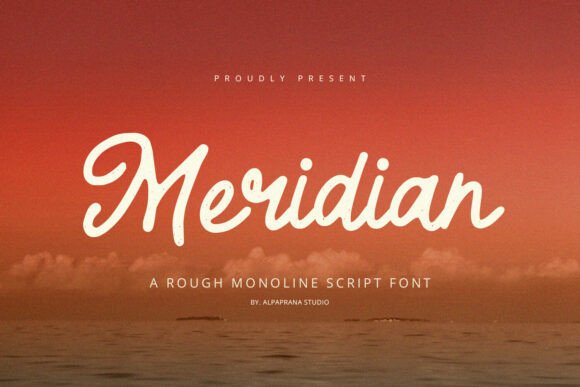
There’s a particular kind of design challenge that calls for type with texture—the kind that doesn’t just sit on a surface but feels like it belongs there, weathered and intentional. Meridian enters that space as a rough script font, offering a blend of classic charm and raw, tactile personality. It’s not trying to be pristine or overly polished; instead, it leans into the beauty of imperfection, giving your work an immediate sense of authenticity and craft.
Where Does Meridian Shine?
This is a display font at heart, built for headlines, logos, and moments where you want text to make an impression rather than simply convey information. Its rough edges and flowing script style give it a handmade quality, making it ideal for projects where you want to evoke warmth, tradition, or a touch of vintage flair.
Think about packaging design for artisanal goods—a coffee bag, a craft beer label, or a small-batch skincare product. Meridian adds an instant layer of authenticity and care. It works beautifully on book covers, especially for genres like historical fiction, memoir, or literary romance, where a script font can hint at narrative depth and personal voice. For special events, it brings elegance and a bespoke feel to invitations, signage, and programs.
In the world of brand identity, Meridian can become the cornerstone of a logo for businesses that want to appear established yet approachable. Imagine it for a boutique bakery, a family-owned vineyard, or a handcrafted jewelry line. It communicates tradition and personal touch without feeling stale. For editorial design, it can serve as a striking pull quote or chapter opener in magazine layouts, adding visual interest and breaking up monotony.
Beyond Print: Digital and Social Applications
Don’t limit Meridian to physical print. It translates effectively into digital spaces when used thoughtfully. As part of social media graphics, it can make quotes, announcements, or promotional posts stand out in a crowded feed. Its textured appearance helps it grab attention on platforms like Instagram or Pinterest. For web design, it’s best used sparingly—a hero header, a special section title, or a call-to-action button—but when applied correctly, it adds significant character and helps establish a unique brand identity online.
How Meridian Influences Perception and Engagement
Fonts are silent communicators. The choice of typeface directly impacts how an audience perceives a message. Meridian, with its rough script character, suggests craftsmanship, individuality, and a human touch. This can be a powerful tool for brands and creators looking to build recognition and foster a deeper connection with their audience.
Using a creative font like this can enhance visual hierarchy. It naturally draws the eye, making it perfect for headlines or key phrases you want readers to remember. When paired with a clean, simple sans serif font for body text, it creates a dynamic and balanced layout that guides the reader’s eye comfortably through the content. This kind of intentional font pairing is a hallmark of professional modern typography.
For small business owners and entrepreneurs, investing in a premium font like Meridian can elevate perceived professionalism. It shows a level of care and attention to detail that generic, overused fonts simply cannot. It becomes a key design asset in your toolkit, helping to create consistent and memorable materials across everything from your website to your shopping bags and t-shirts.
Practical Guidance for Working with Meridian
Before you commit, consider the context. Meridian is a display font, so it’s not designed for long paragraphs of body copy. Its strength is in headlines, logos, and short, impactful text. Always test it at the size you intend to use it. The rough texture that looks charming in a large headline might become muddy and unreadable at smaller sizes, especially on low-resolution screens.
Explore the font family if available. Does it include different weights or styles? A regular and a bold version can offer more flexibility for creating emphasis and hierarchy within your designs. Look at the full character set. Does it include the punctuation, numerals, and symbols you need for your project? A well-designed typeface will have a comprehensive set.
Font pairing is critical. Meridian’s ornate, textured nature demands a simple, stable partner. A geometric sans serif font or a clean, modern serif font often works best. Avoid pairing it with other highly decorative or script fonts, as this can create visual chaos and reduce readability. The goal is contrast and balance.
Finally, check the commercial font license. Ensure it covers your intended use, whether for a client project, merchandise, or a digital product. Understanding the licensing protects you and respects the work of the type designer.
In the end, Meridian is more than just a script font. It’s a tool for storytelling. Its rough-hewn elegance offers a path to designs that feel personal, considered, and built to last. Whether you’re crafting a logo design, laying out a magazine, or branding a new product, it provides a distinctive voice that can set your work apart in a world of smooth, uniform digital text. Use it where it matters, pair it wisely, and let its classic, textured character do the talking.