Hastings and Hastings: A Font That Feels Like a Personal Note
There's a particular warmth to a handwritten note. It carries a sense of intention, of time taken, of a human hand behind the words. In our digital world, that feeling is both rare and incredibly valuable. This is the space where a script font like Hastings and Hastings excels. It’s not just another typeface in your design assets folder; it’s a tool for injecting genuine personality and approachability into your work. As someone who has wrestled with font choices for everything from brand identity to quick social media graphics, I can tell you that finding a font with this kind of authentic, friendly character changes the game.
The Visual Soul of Hastings and Hastings
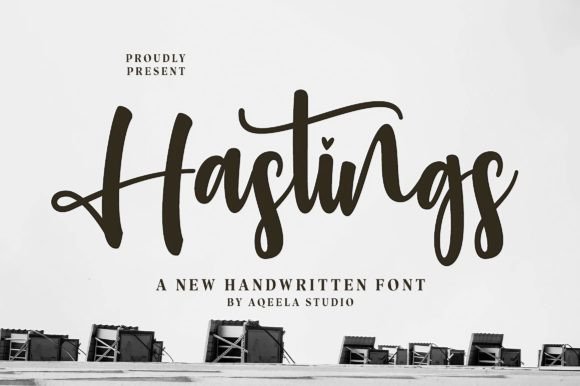
At its core, Hastings and Hastings is a premium font that captures the elegant flow of a natural, handwritten script. Its defining features are its smooth, confident curves and organic, slightly varied strokes. Unlike some script fonts that feel overly rigid or digitally perfect, Hastings maintains a subtle irregularity. This is key—it’s what prevents it from looking like a default system font and instead gives it the charm of actual handwriting. The letterforms connect in a fluid, cursive manner, creating a lovely rhythm that guides the eye across a word or phrase. It strikes a masterful balance: it possesses the sophistication of a formal calligraphic hand, yet retains a casual, friendly vibe that feels welcoming rather than aloof. This duality makes it a uniquely versatile creative font.
The personality of this typeface is best described as charming and elegant. It doesn’t shout for attention with overly swashed or decorative elements. Instead, its appeal lies in its understated confidence. It feels personal, thoughtful, and genuine. This makes it an exceptional choice for projects where building a direct, emotional connection with the audience is paramount. Think about the difference between a typed "Thank You" and one written in a beautiful, personal script—the latter simply carries more weight.
Where This Script Font Truly Shines
Understanding a font’s personality is one thing; knowing where to apply it is where practical design strategy comes in. Hastings and Hastings is a display font, meaning it’s designed for impact at larger sizes, not for body copy. Its strength lies in headlines, logos, and short, impactful text blocks. Here’s where I’ve seen it deliver exceptional results across various projects:
- Wedding & Event Invitations: This is perhaps its most natural habitat. The font’s inherent elegance and warmth make it perfect for setting a romantic, personal tone on save-the-dates, invitations, and thank you cards.
- Logo Design & Brand Identity: For small businesses, boutiques, cafes, or personal brands wanting to project an artisanal, human-centric image, Hastings can form the core of a compelling logo. It works beautifully paired with a clean sans serif font for a balanced brand identity.
- Packaging Design: Imagine this font on a label for a handmade candle, a boutique soap, or a gourmet food product. It immediately communicates care, quality, and a personal touch, elevating the perceived value of the product.
- Social Media Graphics & Marketing: In the endless scroll of a feed, a post featuring a handwritten-style font can stop the thumb. Use it for quotes, promotional announcements, or Instagram Story headers to add a layer of authenticity and relatability.
- Editorial & Web Design: While not for articles, it’s fantastic for pull quotes, chapter headings in a digital magazine, or hero text on a website homepage. It draws the reader in and establishes a distinct mood.
It’s less suited for formal, corporate environments where a more neutral serif font or sans serif font would be appropriate. Its charm is in its personality, so it’s best used where that personality is an asset, not a distraction.
Making Hastings Work in Your Projects: Practical Guidance
Choosing a font is only half the battle. Using it effectively is what separates good design from great design. Here’s some practical advice for integrating Hastings and Hastings into your workflow.
Evaluating Project Fit & Readability
First, ask yourself: does this project call for a personal, handwritten feel? If the goal is to convey authority, data, or ultra-modern sleekness, you might choose a different typeface. But if the goal is connection, warmth, or artisanal quality, Hastings is a strong candidate. Always prioritize readability. Because it’s a script font, avoid using it for long sentences or small body text. Test it at the intended size—what looks gorgeous in a design mockup can become an illegible scrawl on a mobile screen. A good rule of thumb is to use it for headlines or short phrases of no more than a few words.
The Art of Font Pairing
A script font rarely works in isolation. The magic happens in the pairing. Hastings and Hastings pairs exceptionally well with neutral, geometric sans serif fonts (like Montserrat, Poppins, or Lato) or classic, readable serif fonts (like Garamond or Lora). The contrast creates a beautiful visual hierarchy: the script font draws attention as the headline, while the simpler font provides clear, easy-to-read supporting text. This pairing is fundamental to modern typography and is crucial for creating professional-looking designs, whether for a website or a printed brochure.
Exploring the Included Styles & Licensing
A quality premium font like this often comes with more than just the basic letters. Check for included styles such as alternates, ligatures, and swashes. These can be accessed through the Glyphs panel in design software like Adobe Illustrator or Photoshop and allow you to customize the look, preventing your design from feeling generic. For example, you might swap in a different ‘g’ or connect certain letters in a more fluid way. Finally, always verify the licensing. If you’re using it for a client project, a product for sale, or extensive marketing, ensure you have the correct commercial font license. This protects both you and the font designer and is a hallmark of professional practice.
In the end, Hastings and Hastings is more than just a collection of curves and strokes. It’s a bridge between the digital and the personal. Used thoughtfully, it can transform a simple design into something that feels considered, crafted, and deeply human. It’s a valuable asset for any designer, marketer, or creator looking to add that essential touch of warmth to their visual communication.