Christopher's: The Elegant Script Font That Brings Warmth to Every Design
There’s something deeply personal about a handwritten touch in a world dominated by clean, geometric sans serifs and rigid serifs. It feels immediate, human, and full of character. This is the exact space where Christopher's thrives. It’s not just another script font; it’s a carefully crafted typeface designed to infuse projects with an authentic, elegant personality that feels both timeless and personal. The fluid, connected letterforms and graceful swashes make it a standout choice for anyone looking to add a layer of sophistication and warmth to their work.
Understanding the Personality Behind the Curves
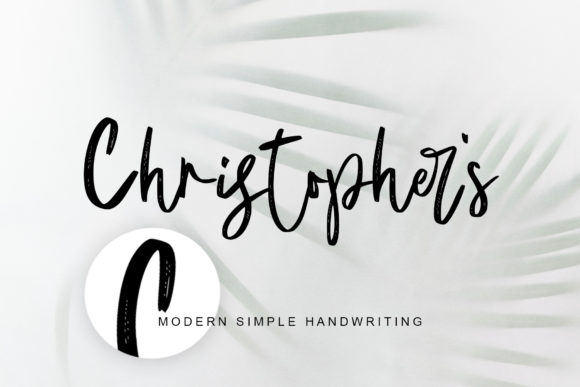
At its core, Christopher's is a premium font that walks the line between classic calligraphy and modern handwritten style. The letterforms are inherently elegant, with a natural flow that mimics the subtle pressure variations of a skilled hand. It avoids the overly casual or messy look of some handwritten fonts, instead presenting a polished, cursive aesthetic. This balance makes it incredibly versatile. It can feel luxurious on a wedding invitation, approachable on a thank you card, and distinctive in a logo design. The visual personality is one of refined grace—it’s confident without being loud, and detailed without being distracting.
What truly elevates this typeface is its technical execution. As a PUA-encoded font, Christopher's gives you full access to its extensive library of alternate characters, swashes, and ligatures through standard software. This isn’t just a static set of letters; it’s a dynamic design asset. You can customize the starting and ending swashes on words, choose from different stylistic alternates for key letters like ‘b’, ‘k’, and ‘s’, and create truly unique typographic compositions. This level of control is crucial for professional projects, allowing you to tailor the font’s expression to perfectly match your brand identity or creative vision.
Where Christopher's Truly Shines: Practical Applications
Knowing a font is beautiful is one thing; understanding where to deploy it effectively is another. Christopher's excels in contexts where personal connection and aesthetic appeal are paramount. Let’s move beyond the obvious and look at specific, high-impact uses.
Crafting Memorable Brand Identities
For entrepreneurs and small business owners, a logo is often the first handshake with a customer. Using Christopher's as the primary logotype or as part of a wordmark can instantly communicate values of craftsmanship, personal service, and attention to detail. It’s particularly effective for brands in the wedding industry, boutique retail, artisanal food products, wellness coaching, and creative services. Pair it with a clean, geometric sans serif for body text, and you’ve established a clear visual hierarchy that feels both professional and approachable. The font becomes a cornerstone of your brand identity, making your business instantly recognizable and emotionally resonant.
Elevating Print and Digital Collateral
The applications extend far beyond logos. Think about the tangible touchpoints of a business. Business cards featuring a name in Christopher's feel more personal and memorable. Thank you cards enclosed with orders transform a simple transaction into a relationship-building moment. In publishing and editorial design, this script font is perfect for pull quotes, chapter headings, or magazine mastheads, adding a focal point of elegance that breaks up long blocks of text. For packaging design, it can highlight a product’s name or a special ingredient, suggesting care and quality. In the digital realm, it makes social media graphics stand out in a crowded feed, especially for announcements, inspirational quotes, or promotional offers where stopping the scroll is the goal.
Adding a Personal Touch to Personal Projects
The value of a creative font like Christopher's isn’t limited to commercial work. For hobbyists, crafters, and content creators, it’s a powerful tool for personal expression. Design stunning wedding invitations, graduation announcements, or holiday cards that look professionally made. Use it to create beautiful typographic prints for your home, design a custom monogram, or label homemade gifts. Bloggers and publishers can use it sparingly within their web design for featured article titles or pull quotes to add visual interest and guide the reader’s eye, enhancing the overall reading experience.
Making the Most of Christopher's: A Designer’s Practical Guide
Integrating a new typeface into your workflow requires more than just installation. To use Christopher's effectively and avoid common pitfalls, consider these practical points.
Evaluating Project Fit: Always start with your audience and message. This font communicates elegance and personality. It’s perfect for a lifestyle brand or a creative agency but might feel out of place on a legal document or a technical manual. Ask yourself: does a handwritten, script style support the core message I need to convey?
Mastering Font Pairing: The strength of a display font like Christopher's is amplified by what it’s paired with. For body copy, you need a highly legible partner. A simple, neutral sans serif font (like Open Sans, Lato, or Montserrat) is a failsafe choice, providing a clean counterpoint. A classic serif font (like Lora or Merriweather) can create a more traditional, sophisticated pairing. The key is contrast in structure, not in style. Let Christopher's be the star for headlines, and use a workhorse font for readability in paragraphs.
Testing for Readability: As with any script or handwritten font, context is everything. Use it at larger sizes for headings and logos. Avoid using it for long paragraphs or small body text, where the connected letterforms can become difficult to read, especially on screens. Always test your designs at the intended size and on multiple devices if it’s for web design.
Leveraging the Glyphs: Don’t just type and go. Explore the OpenType features. In Adobe Illustrator, Photoshop, or even Canva, access the Glyphs panel to see all the alternate characters. Use a swash on the first letter of a name to add flair. Substitute a standard ‘e’ for a more stylistic one to add uniqueness. This transforms the font from a static tool into a dynamic part of your creative process.
Understanding the License: Since Christopher's is a commercial font, ensure you purchase the correct license for your needs. If you’re using it for a client’s logo, you typically need a license that covers commercial use. For personal projects like a wedding invite for yourself, a personal license suffices. Always review the font’s EULA (End-User License Agreement) to understand the terms, especially regarding web embedding or use on print-on-demand platforms.
In the end, choosing a typeface like Christopher's is about choosing to communicate with more than just words. It’s about adding a layer of emotion, craft, and intention to your visual language. When used thoughtfully, it doesn’t just decorate a design—it connects with your audience on a human level, making your message not only seen but felt.